QPAIN Logo
QPAIN2027
Keynote Speakers

Hear from global photonics leaders

Meet the keynote speakers of QPAIN 2027, world-leading experts in photonics and optical technologies. You can also explore the keynotes from our previous edition (QPAIN 2026) further below.

QPAIN 2027

Keynote Speakers

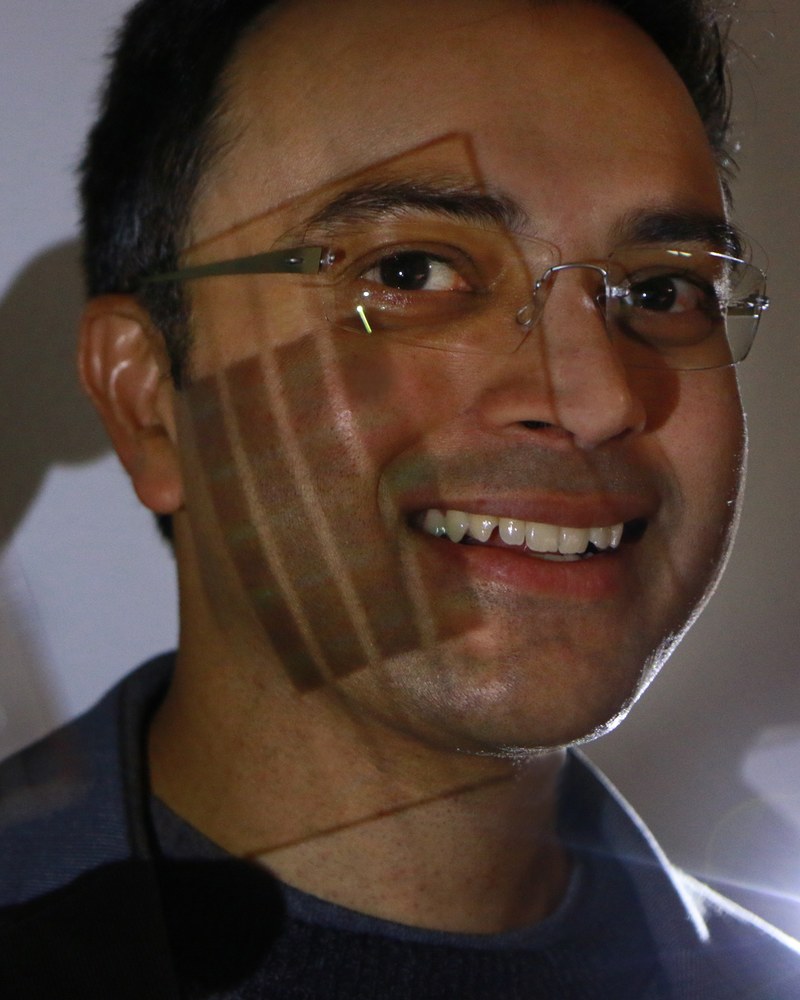
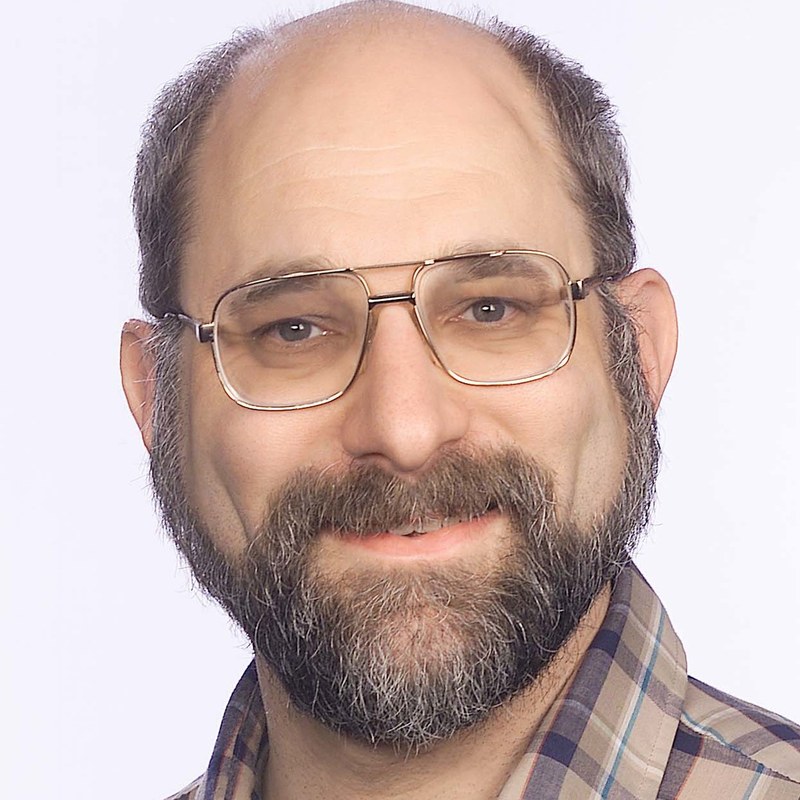
Curtis R. Menyuk portrait
Keynote 01

Keynote Talk

Stability and Noise in Frequency Combs

Curtis R. Menyuk

  • Computer Science and Electrical Engineering Department, University of Maryland Baltimore County (UMBC), Baltimore, MD, USAUnited States
  • Center for Navigation, Time and Frequency Research (Centavr)
Editor-in-Chief, Advances in Optics and PhotonicsFellow of APS, Optica & IEEE2024 SPIE Stokes Award

Abstract

Frequency comb technology has revolutionized time and frequency applications over the past 25 years, and chip-scale frequency combs based on microresonators appear poised to do the same because they offer the potential advantage of lower size, weight and power. Microresonators support a wide variety of complex waveforms in addition to bright single solitons that lead to structured frequency combs that can be used in different applications. Determining where in the experimentally-adjustable parameter space these waveforms are linearly stable and their long-term nonlinear stability in the presence of noise and other perturbations has been a theoretical challenge. We have developed a suite of methods based on dynamical systems theory to meet this challenge. These include boundary-tracking algorithms to determine where in the parameter space these solutions exist and are linearly stable, methods to determine the impact of both laser and thermorefractive noise on the frequency comb and a synergetic algorithm to determine the long-term, nonlinear stability of these waveforms. Here we review the state of the art and the path for future improvements.

Biography

Dr. Curtis R. Menyuk has been a professor at the University of Maryland Baltimore County (UMBC) since 1986 and is currently in the Computer Science and Electrical Engineering Department. He has worked or consulted at large companies, startup companies, and for the US Department of Defense. He is a fellow of APS, Optica, and the IEEE. He is a winner of several awards, including a 2008 JILA Visiting Fellowship, the 2013 IEEE Streifer Award, a 2015 Humboldt Foundation Research Award, and the 2024 SPIE Stokes Award. His research group at UMBC specializes in modeling of photonic systems, and the equations and algorithms that his group has devised are widely used in the photonics community. He is director of the UMBC Center for Navigation, Time, and Frequency Research. He is also editor-in-chief of Advances in Optics and Photonics, published by Optica.
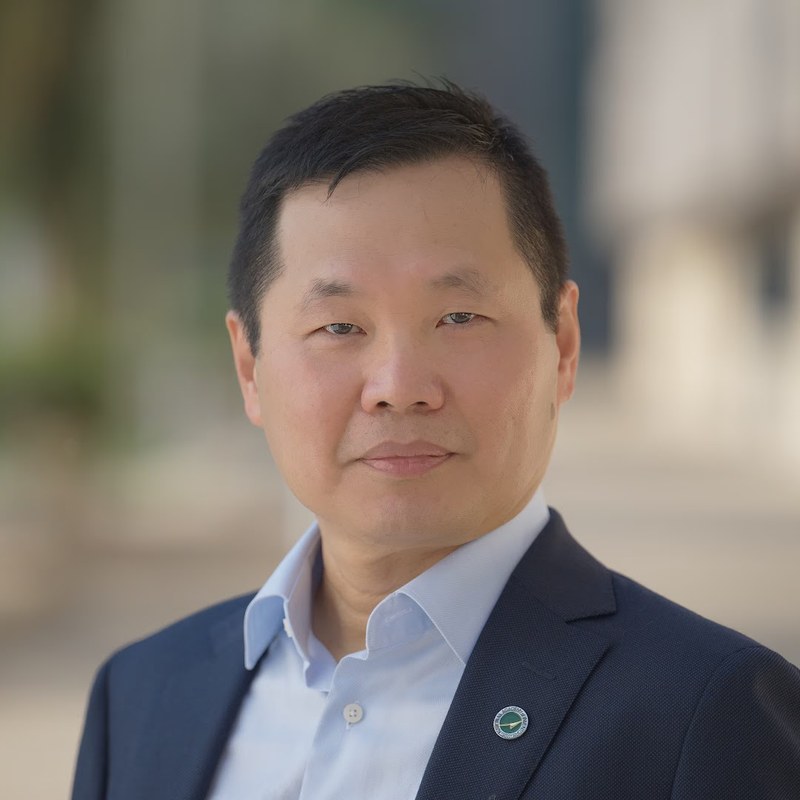

Boon S. Ooi portrait
Keynote 02

Keynote Talk

Semiconductor Light Sources for AI Data Centers and Secure Optical Networks

Boon S. Ooi

  • Rensselaer Polytechnic Institute (RPI), Troy, NY, USAUnited States
  • King Abdullah University of Science and Technology (KAUST), Thuwal, KSASaudi Arabia
2027 IEEE Photonics Society Distinguished LecturerEditor-in-Chief, IEEE Photonics Technology LettersFellow of IEEE, APS, OSA, SPIE, NAI & IOP

Abstract

Generative AI is driving unprecedented demand for computing, energy, cooling, bandwidth, and low-latency connectivity, motivating unconventional AI data-center architectures in space, and underwater environments. These platforms will increasingly rely on high-capacity free-space optical links, yet data and hardware security remain comparatively underexplored. This talk will provide an overview of secure-key generation using semiconductor light sources as entropy sources for random number generation (RNG) and physical unclonable functions (PUFs). I will highlight our work on chaotic VCSELs, integrated VCSEL–photodetector entropy pixels, and micro-LED platforms that combine RNG, device authentication, and optical wireless communication toward resilient and secure future photonic networks.

Biography

Boon S. Ooi is the Future Chips Constellation Chair Professor at Rensselaer Polytechnic Institute (RPI), USA. He also holds the position of Al-Khawarizmi Distinguished Professor of Electrical and Computer Engineering at KAUST, Saudi Arabia. His research focuses on optoelectronic devices and systems for optical communications and sensing applications. He holds 50 issued U.S. patents and is the recipient of 2024 OSA Sang Soo Lee Award, the 2023 Khalifa International Award, and multiple best paper awards. He is the Editor-in-Chief of IEEE Photonics Technology Letters and an Editorial Board Member of Proceedings of the IEEE. He was selected as a 2027 IEEE Photonics Society Distinguished Lecturer. Professor Ooi is a Fellow of the IEEE, the American Physical Society (APS), Optical Society of America (OSA), SPIE, U.S. National Academy of Inventors (NAI), and the Institute of Physics (UK).

QPAIN 2026 Archive

Featured keynote sessions

Explore talks from distinguished researchers spanning quantum photonics, AI, microwave photonics, and biomedical engineering.

Machine Learning in Nonlinear and Ultrafast Photonics

John Dudley

  • Optics Department, UMLP UFR ST, France
  • Distinguished Lecturer, IEEE Photonic Society
  • WebsiteVisit
Abstract+

Machine learning is a subset of artificial intelligence that uses advanced algorithmic methods to analyze data and to optimize system performance. Machine learning is becoming a standard tool in ultrafast nonlinear photonics, with particular interest in exploring how optical nonlinearities can be exploited in optical computing. This talk will review this rapidly developing area, covering topics such as neural networks applied to data analysis, evolutionary algorithms for broadband source optimization, data-driven techniques for the discovery of physical models, and supercontinuum nonlinearity applied to optical neural networks. The talk will be at an overview and tutorial level, and is given as part of the IEEE Photonics Society Distinguished Lecture programme for 2026.

Biography+

John Dudley received B.Sc and Ph.D. from the University of Auckland (New Zealand) in 1987 and 1992. He carried out postdoctoral research at the University of St Andrews in Scotland before taking a lecturing position in 1994 at the University of Auckland. Since 2000, he has been Professor at the Universite Marie et Louis Pasteur in France and he also holds a Fundamental Research Chair at the Institut Universitaire de France. His research covers a range of topics in ultrafast and nonlinear optics, and he has published extensively. He is committed to service and outreach, and currently chairs the Steering Committee of the UNESCO International Day of Light. He is a Fellow of the IEEE, Optica, SPIE, EOS, IOP (London), and an Honorary Fellow of the Royal Society of New Zealand. He has received leadership and outreach awards from Optica, SPIE, APS and the IOP, and research honors including the CNRS Silver Medal, the SPIE Edgerton Award in High Speed Optics, the Optica R. W. Wood Prize, and the EPS-QEOD Award for Research into the Science of Light.

Rajesh Menon portrait
Keynote

High-Dimensional Imaging: Co-Optimizing Hardware & Algorithms for Rich Scene Capture

Rajesh Menon

  • Distinguished Lecturer, IEEE Photonic Society
  • Director, Laboratory for Optical Nanotechnologies
  • Full Professor, University of Utah
Abstract+

We present a new paradigm in imaging that unifies inverse-designed optics, unconventional sensors, and machine learning to directly capture high-dimensional scene information, including spectrum, polarization, depth, coherence, temporal dynamics, at the point of acquisition. By co-designing nanostructured optical encoders with event-based and conventional sensors, our systems map rich physical features into compact, photon-efficient measurements decoded in real time. Applications span astronomy, biomedical diagnostics, remote sensing, and industrial inspection. This approach moves beyond traditional image-then-analyze pipelines toward intelligent, task-specific imagers that maximize information capture while minimizing size, weight, power, and latency.

Biography+

Rajesh Menon combines his expertise in nanofabrication, computation, and optical engineering to impact several fields including inverse-designed photonics, flat lenses, and unconventional imaging. His research has produced numerous peer-reviewed publications, 40 patents, and 4 spin-off companies. Rajesh is a Member of the National Academy of Inventors, Fellow of Optica and SPIE, Senior Member of IEEE, and an IEEE Photonics Society Distinguished Lecturer. Among his honors are a NASA Early-Stage Innovations Award, NSF CAREER Award, and the International Commission for Optics (ICO) Prize. Rajesh currently directs the Laboratory for Optical Nanotechnologies at the University of Utah, where he is a tenured full professor. In this capacity, he has worked closely with sensor teams at NVESD, ONR, DARPA, NRL, AFOSR, NASA, and related agencies. He received S.M. and Ph.D. degrees from MIT. He serves and has served on program committees for the IEEE Photonics Conference, EIPBN, OSA Imaging Systems and Applied Optics Congress, and CLEO (Complex Media and Metamaterials), among others. He is also an Associate Editor of Biomedical Optics Express and a former Associate Editor of Optics Express.

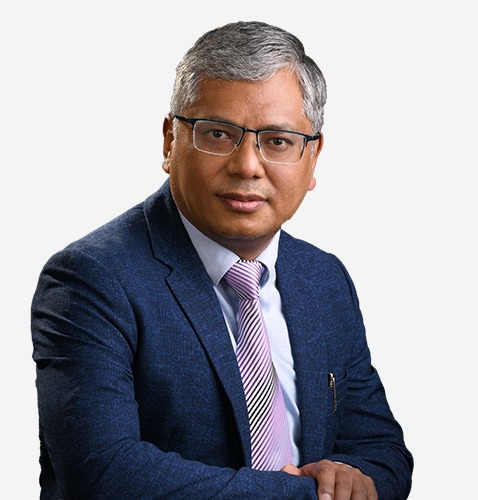
Bikash Nakarmi, PhD portrait
Keynote

AI-PHIXR: AI-Powered Photonics-based Interference-Resilience Next Generation Robust Radar

Bikash Nakarmi, PhD

  • Professor, Nanjing University of Aeronautics and Astronautics, Nanjing, China
  • Honorary Chair Research and Innovation, MBUST, Chitlang, Nepal
  • VP, Nanjing Tianlu Flying-Auto, Nanjing, China
  • Chair, IEEE Photonic Society Nanjing Chapter
Abstract+

The widespread deployment of radar systems across autonomous navigation, aerospace, defense, and consumer electronics has resulted in severe spectral congestion, making electromagnetic interference the fundamental bottleneck limiting radar detection accuracy, range resolution, and operational reliability. Conventional electronic-domain interference mitigation solutions are constrained by inherent bandwidth limits, high computational overhead, and poor adaptability to dynamic and complex interference environments. Microwave photonics, with its intrinsic advantages of ultra-wide bandwidth, electromagnetic interference immunity, and low transmission loss, has emerged as a promising pathway to overcome these limitations. In this keynote, we present AI-PHIXR, a comprehensive framework developed through our long-term research efforts in microwave photonics technologies with a focus on photonics radar to provide safe, secure and robust (S2R) radar environment. In this talk, we first outline our foundational contributions to photonics radar systems including the expansion of single-mode Fabry-Perot laser diodes (SMFP-LD) for microwave photonic applications and the development of interference-robust reconfigurable radar waveforms using advanced optical injection locking. We will then present our comprehensive photonic radar framework, which combines photonics and AI to ensure safe, secure, and efficient operation in dynamic environments through reconfigurable photonic waveform generation platforms with hardware-aligned adaptive processing workflows, enabling dynamic waveform adaptation, signal mismatch correction, and high-fidelity signal recovery in complex spectral environments. By bridging MWP and AI, AI-PHIXR establishes scalable pathways towards S2R radar operation in safety-critical scenarios. The keynote concludes with a discussion on practical deployment opportunities and future research directions including hardware and AI optimization, edge-deployable photonics intelligence, and resilient radar for next generations.

Biography+

Bikash Nakarmi (Senior Member, IEEE) is a full Professor at the College of Electronics and Information Engineering, Nanjing University of Aeronautics and Astronautics (NUAA), China, and serves in the Key Laboratory of Radar Imaging and Microwave Photonics, Ministry of Education. He received his B.E. degree in Electronics and Communication Engineering from Tribhuvan University, Nepal, in 2004, his M.E. degree in Information and Communication Engineering from Harbin Engineering University, China, in 2008, and his Ph.D. degree from the Korea Advanced Institute of Science and Technology (KAIST), Republic of Korea, in 2012. Prof. Nakarmi is an expert in microwave photonics, optical communications, and AI-assisted photonic signal processing. Following research roles at InLC Technology, Nanjing University, and KAIST, he has led numerous international research projects and authored approximately 150 publications. Bridging academia and industry, he serves as VP of Research at Nanjing Tianlu Flying-Auto, founded multiple startups in China and Nepal, and is the Honorary Chair of Research at MBUST, Nepal. A Senior Member of IEEE and OSA, he holds various editorial and conference chair roles and currently chairs the IEEE Photonics Society Nanjing Section Chapter.

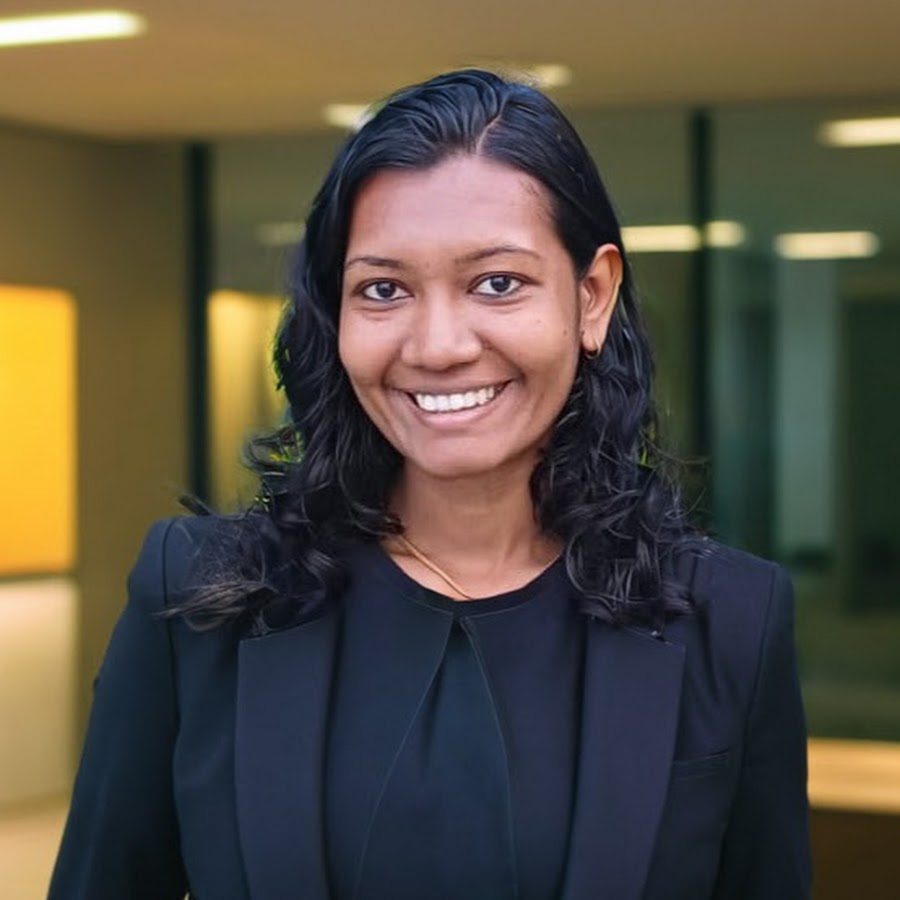
Dr. Jency Rubia J portrait
Keynote

Bridging the Gap: From Quantum-Inspired Algorithms to Real-World Deep Learning Frameworks

Dr. Jency Rubia J

  • Postdoctoral Fellow, Indian Institute of Technology (IIT) Guwahati
  • SRM Institute of Science and Technology, Kattankulathur, India
Abstract+

As we stand at the precipice of the quantum era, the integration of quantum mechanics into machine learning is no longer theoretical. This session explores the evolution of Quantum-Inspired frameworks, specifically focusing on how Quantum-Inspired Genetic Algorithms (QIGA) can revolutionize feature selection in high-dimensional datasets. We will discuss the architectural transition from classical Deep Learning to Quantum Neural Networks (QNNs), demonstrating how these hybrids overcome the curse of dimensionality. By examining case studies in complex predictive modeling, such as air quality forecasting, this keynote provides a roadmap for researchers to leverage quantum principles today while preparing for the hardware of tomorrow.

Biography+

Dr. Jency Rubia J is an active faculty member in the Department of Computing Technologies at the SRM Institute of Science and Technology, Kattankulathur. She recently concluded a prestigious two-year tenure as a Postdoctoral Fellow at the Indian Institute of Technology (IIT) Guwahati, where her research pivoted toward the intersection of quantum computing and environmental intelligence. She has published many reputed SCI and Scopus-indexed journal articles. She is a recognized innovator in high-speed computational architectures with a granted patent and is the author of the book Quantum Computing. Her current research focuses on developing Hybrid Quantum-Inspired Deep Learning frameworks, specifically utilizing Quantum-Inspired Genetic Algorithms (QIGA) for optimized feature selection and Quantum Neural Networks (QNN) for complex predictive modeling. Dr. Jency is an active member of several professional global bodies, including IEEE, ACM, IETE, and ISTE, and remains dedicated to bridging the gap between hardware optimization and quantum-inspired AI.

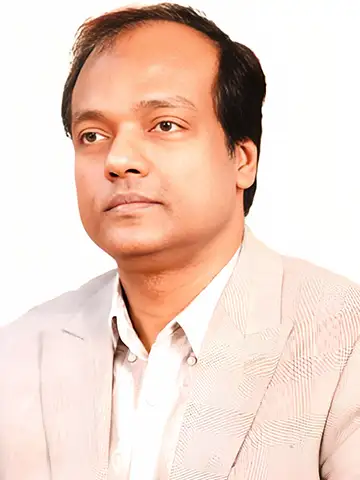
Dr. Shaikh Fattah, SMIEEE, FIEB portrait
Keynote

NextGen AI-Driven Technology: Robotics and Biomedical Applications

Dr. Shaikh Fattah, SMIEEE, FIEB

  • Professor, Department of EEE, BUET
  • Founder Director (2022-24), Institute of Robotics & Automation, BUET
  • Chair, IEEE EMBS and SSIT Bangladesh Chapter
  • Vice-Chair, IEEE RAS, SPS, IAS Bangladesh Chapters
  • WebsiteVisit
  • Google ScholarVisit
Abstract+

In this talk, the key innovations in the integration of AI with robotics and healthcare systems will be presented. It highlights applications, such as autonomous and assistive robots and deep learning-based biomedical solutions including medical imaging, physiological signal analysis and intelligent diagnostics. Recent techniques developed by the speaker will be demonstrated. The role of Generative AI (GenAI) in clinical interpretation and robotic perception is also introduced.

Biography+

Shaikh Fattah received his Ph.D. degree from Concordia University, Canada and completed postdoctoral research at Princeton University, USA. He received his B.Sc. and M.Sc. degrees from BUET, Bangladesh, where he is currently a Professor in the Department of EEE. He has published 300+ journal and conference papers and delivered 120+ keynote and invited talks. His honors include Concordia University's Distinguished Doctoral Dissertation Prize (ENS/2009), the URSI Canadian Young Scientist Award (2007), the BAS-TWAS Young Scientists Prize (2014), the MGA Achievement Award (2016), and the IEEE Region 10 Outstanding Volunteer Award (2018). He has served in numerous IEEE leadership roles across HAC/HTB, SSIT, PES-HAC, Smart Village, Technical Activities, Educational Activities, and Bangladesh Section chapter leadership. He is currently a Senior Editor of IEEE Access, has served as Editor-in-Chief of IEEE PES E-newsletter and Lead Editor of IEEE R10 Newsletter, and has been a member of the IEEE Potentials Magazine Editorial Board since 2022. He also served as General Chair of IEEE Region10-HTC 2017, TPC Chair of IEEE TENSYMP 2020, and Chair of ICCIT 2025, among many other IEEE conferences. He has consistently ranked among the world's top 2% scientists during 2023-2025 (Stanford/Elsevier). He is a Senior Member of IEEE and a Fellow of IEB.